



What is Acro?

Acro is short for Acrobatics.
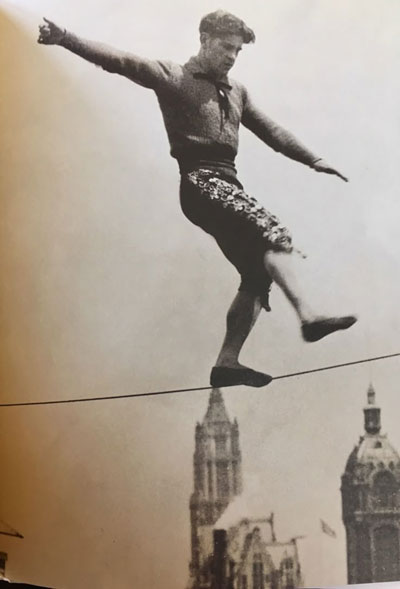
One of the first thoughts that comes to mind when we hear the word ‘Acrobat’ is a tightrope walker carrying an extra along pole every so gently cat-walking his way across a thin wire high in the air. Although this will always be the iconic symbol of the birth of Acrobatics, the word has grown into the dynamic and diverse athletic art form of today.
Acrobatics is a vast landscape of movement disciplines that span cultures, environments, and centuries.
Origin of the word Acrobatics:
First recorded in 1815–25; from French acrobate, from Greek akróbatos “walking on tiptoe,” equivalent to akro- prefix meaning “height, extremity” + -batos, verbal adjective of baínein “to go”; the French word may be a recoinage, or an etymological reading of the Greek word; ’acro-.’
1845, from French acrobate “tightrope-walker” (14c.) and directly from a Latinized form of Greek akrobatēs “rope dancer, gymnastic performer,” which is related to akrobatos “going on tip-toe, climbing up high,” from akros “topmost, at the point end” (from PIE root *ak- “be sharp, rise (out) to a point, pierce”) + Greek agential element -batēs “one that goes, one that treads (in some manner), one that is based,” from -batos, verbal adjective from stem of bainein “to go, walk, step” (from PIE root *gwa- “to go, come”).
If you search what the Greek word ‘akros’ means, you will find various potential uses of the word including edge, extreme, utmost, climactic, and ultra. All epic descriptions of the beautiful world of acrobatics. ‘Akros’ combines with ‘batos’ the verbal adjective of ‘baínein’ meaning to go/to walk/to step*.*
Ok, so what all counts as Acrobatics then?
Check out our ‘What Counts as Acrobatics’ post for a comprehensive break down of all the Acro disciplines within the incredible, dynamic world of Acrobatics!