


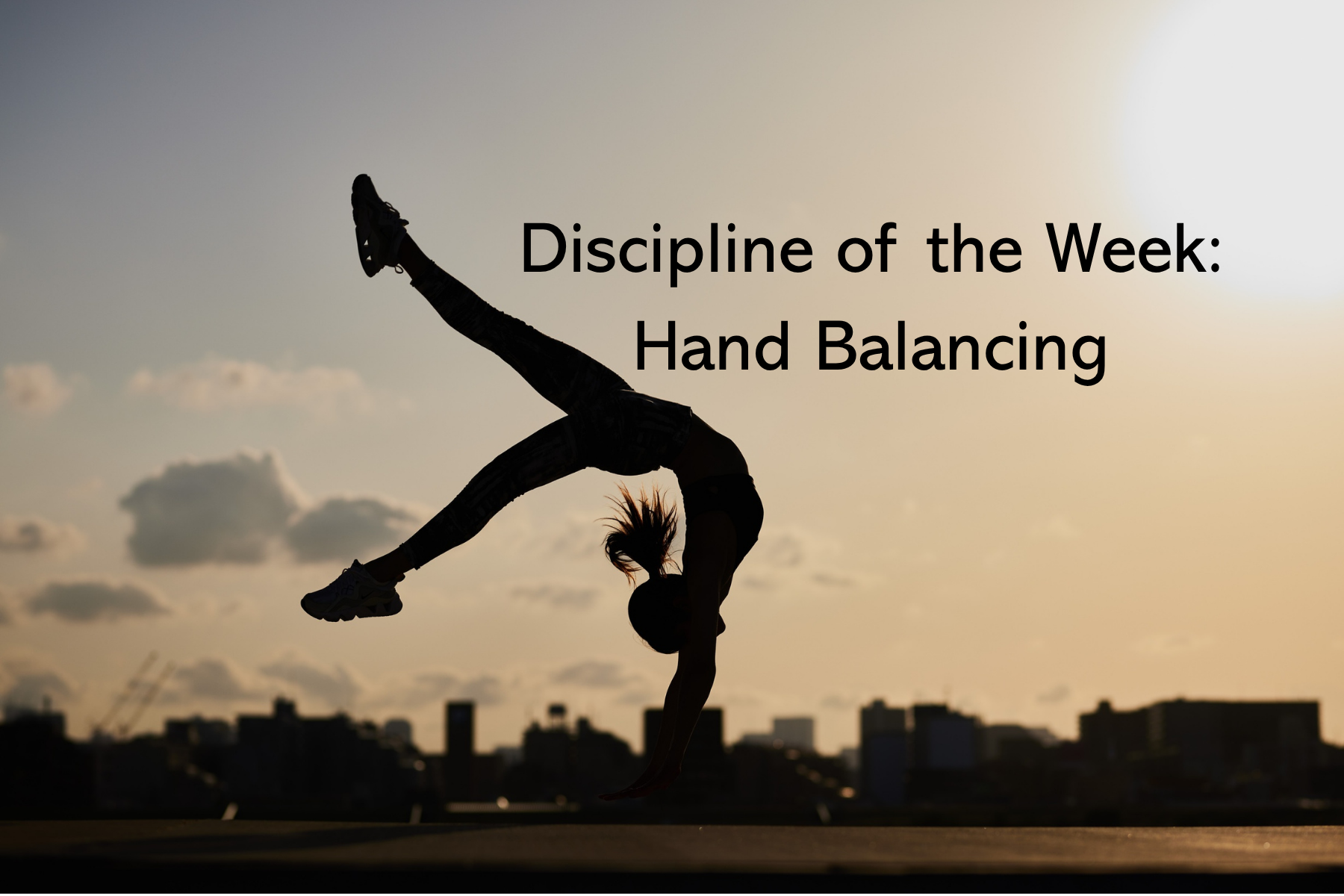
Discipline of the Week: Hand Balancing
Discipline of the Week: Hand Balancing — The Art of Finding Stillness Upside Down
Strength. Balance. Control. Precision. Stillness.
There is something captivating about watching someone balance effortlessly on their hands. Whether it’s a straight handstand held with perfect alignment, a slow press to handstand, or a series of controlled transitions between shapes, hand balancing combines physical strength with extraordinary body awareness.
But what looks effortless is rarely simple.
Behind every steady handstand is a constant conversation between the hands, wrists, shoulders, core, and nervous system. Small adjustments happen continuously, allowing the body to maintain balance while working against gravity.
This week, we’re exploring HAND BALANCING: a discipline that challenges the body, sharpens concentration, and rewards patience, consistency, and the art of micro-adjustments.
What Is Hand Balancing?
Hand balancing is the practice of supporting and controlling the body primarily through the hands while maintaining specific positions, transitions, and movements.
While the handstand is the most recognizable skill, the discipline extends far beyond holding a straight line upside down. It can include press handstands, straddle and pike positions, one-arm balances, and controlled transitions between shapes.
The Science Behind Hand Balancing: Strength, Balance and Body Awareness
A handstand might look motionless, but the body is constantly making tiny adjustments to stay balanced. The fingers regulate pressure through the hands, the shoulders and core work together to support body weight and maintain alignment, and proprioception — your body’s ability to sense its position and movement — helps you recognize and correct shifts in balance.
Interesting fact: A handstand isn’t simply about strength. Your nervous system combines sensory information from your eyes, inner ear, and body to help you maintain balance. With practice, you become better at recognizing small shifts and responding with precise adjustments.
This combination of physical strength and coordination helps develop several important skills:
- Strength: Building control through the wrists, shoulders, arms, and core.
- Balance and coordination: Making precise adjustments while inverted.
- Body awareness: Understanding alignment and position in space.
- Mobility and compression: Developing the range of motion and active strength needed for press handstands and advanced positions.
- Focus and patience: Refining technique through consistent, deliberate practice.
How to Progress in Hand Balancing
Every hand balancer starts somewhere. A typical progression might look like this:
- Build your foundation: Develop wrist tolerance, shoulder strength, and core control.
- Practice with wall support: Learn alignment and become comfortable upside down.
- Develop balance control: Explore controlled weight shifts and gradually reduce wall support.
- Work toward a freestanding handstand: Combine alignment, entry technique, and balance.
- Explore advanced skills: Progress toward press handstands, complex transitions, and one-arm balances as your technique develops.
Progress looks different for everyone. Listen to your body and always progress at your own pace.
Hand Balancing and the Power of Community
Hand balancing appears across many movement disciplines, from gymnastics and circus performance to calisthenics, breakdancing, and partner Acro. Each community brings its own techniques, training methods, and creative approaches.
Connecting with other practitioners can help you discover new training methods, share knowledge, find training partners, and stay motivated. You don’t have to be an advanced hand balancer to benefit from a supportive community.
And when you travel, finding a place to train can make a new city feel much more familiar.
Find Your Hand Balancing Community With AcroEssence
Imagine arriving in a new city and already knowing where the hand balancers train, which communities welcome visiting acrobats, and where you might find your next training partner.
That’s the idea behind AcroEssence.
The AcroEssence global map helps acrobats discover communities, connect with fellow practitioners, and find opportunities to train around the world.
🌎 ARE YOU A HAND BALANCER?
Join the AcroEssence global map and find acrobats to CONNECT, TRAVEL, and TRAIN with around the world.
Because your next training partner might be closer than you think — or waiting for you on the other side of the world.
IGNITE. UNITE. TAKE FLIGHT.
#acroessence #handbalancing #handstand #handstandpress #onearmhandstand